


Drug Product Characterization Studies and Testing Services
At 7:30 a.m., a scientist cracks open a fresh vial from yesterday’s fill run and holds it against the light. Yesterday the solution was crystal clear; today there is a faint haze. The HPLC chromatogram says the assay is fine, impurities are within limit, but something looks off. In the next room a dissolution bath warms to 37 °C; a colleague checks the paddle height again, because a millimetre here can change a curve. Down the corridor, a stability chamber hums, pushing samples through long-term and accelerated conditions. Someone else prepares bacterial cultures for a preservative efficacy test; another tech calibrates a viscometer before a rheology run on a semi-solid. None of this feels dramatic. It is slow, careful work. But this is exactly the work that turns a promising formulation into a reliable medicine.

Drug product characterization is a simple idea done in a very disciplined way. Teams ask what the product is made of, how it is structured inside, and how it performs when new, after storage, and during real use. Chemical identity, assay, and degradants are measured. Particle or droplet size is tracked. Viscosity, hardness, friability, and content uniformity are checked. Release is measured—dissolution for tablets and capsules, IVRT for creams and gels—and where needed, permeation across skin is assessed with IVPT. Microbiology is examined to see whether the product stays clean in actual use or allows microbes to grow. For sterile products, sterility and endotoxins are verified. These checks continue over time, under different climates, through shipping simulations, and after opening and reconstitution. The goal stays straightforward: the same safe, effective performance, batch after batch, from the start of shelf-life to the very last dose. This is how a label claim becomes real in the world.
Good characterization work saves time and pain. If the dissolution method is not discriminating, you discover it late when a small change in excipient grade shifts exposure. If rheology is not linked to IVRT for a dermatology product, a plant batch can “feel” right but release too slowly. If preservative testing ignores partitioning into plastics or oil phases, a liquid looks fine in the lab and fails in a patient’s kitchen. When characterization is built well, it becomes the daily language of the product: it tells you what matters, which ranges are safe, how to set specifications, and how to prove comparability when you make changes later. In short, the data reduces argument and speeds decisions.
Connect with our scientific experts for your drug discovery, development and manufacturing needs
Drug Product Characterization
A drug product is the finished, ready-to-use medicine a patient receives: a tablet in a blister, a syrup in a bottle, an injection in a vial or prefilled syringe, a cream in a tube. It carries the active ingredient (API) with excipients that support stability, taste, solubility, release, preservation, and manufacturability. It is not just a recipe on paper; it is also a process and a pack. Change the process or the container and the same ingredients can behave very differently.
Making a drug product, in simple terms, means combining materials in a defined order under controlled conditions—shear, temperature, mixing time, vacuum or degassing—then shaping or filling the product (compression or coating for tablets; filling and sealing for liquids and semi-solids; filtration and aseptic steps for injectables), and finally packing it with the right container–closure and clear instructions. Every step nudges structure: particle or droplet size, crystal form, porosity, viscosity. Each must run within proven ranges to keep performance consistent.
Characterization runs alongside this journey from start to finish. Early on it stays light and fast: methods that see the active pharmaceutical ingredient (API) cleanly and a few physical checks to gauge feasibility. Before first-in-human (FIH), it becomes phase-appropriate with stability-indicating methods, basic stability, a microbiology plan where needed, and performance tests like dissolution or in-vitro release testing (IVRT). From Phase 2 through registration it deepens into full International Council for Harmonisation (ICH) stability, validated methods, device–product performance, and clear links between structure and clinical relevance. After approval it continues for lifecycle changes and trending. It is not a one-time activity; it is the steady habit that keeps the product honest.
Stability Test
Stability is the test that ties everything together. ICH Q1A(R2) explains the package of long-term, intermediate (where relevant), and accelerated studies needed for registration, plus supporting studies like photostability. In practice, a phase-appropriate plan starts light in early development to map the main risks, then deepens into full ICH conditions as the product profile settles. The aim is not only to justify a shelf-life number; it is to understand degradation routes (hydrolysis, oxidation, photolysis), the role of water and oxygen, and the way packaging and process conditions change the rate. When those links are known, smart specifications can be set and handle post-approval changes can be handled with less friction.
Analytical Identity, Assay, Impurities
Every program needs a stability-indicating method that can separate the API from known and likely degradants. ICH Q2(R2) sets validation expectations: specificity, accuracy, precision, range, LOD/LOQ, and robustness. A rugged method is one that performs the same in the development lab, the QC lab, and the partner site after transfer. The method should be tough enough to handle matrix effects from different dosage forms—buffers and surfactants in liquids, polymers in semi-solids, binders and coatings in tablets. Getting this right early saves endless rounds of rework during scale-up and tech transfer.
Dissolution and Other Release Tests
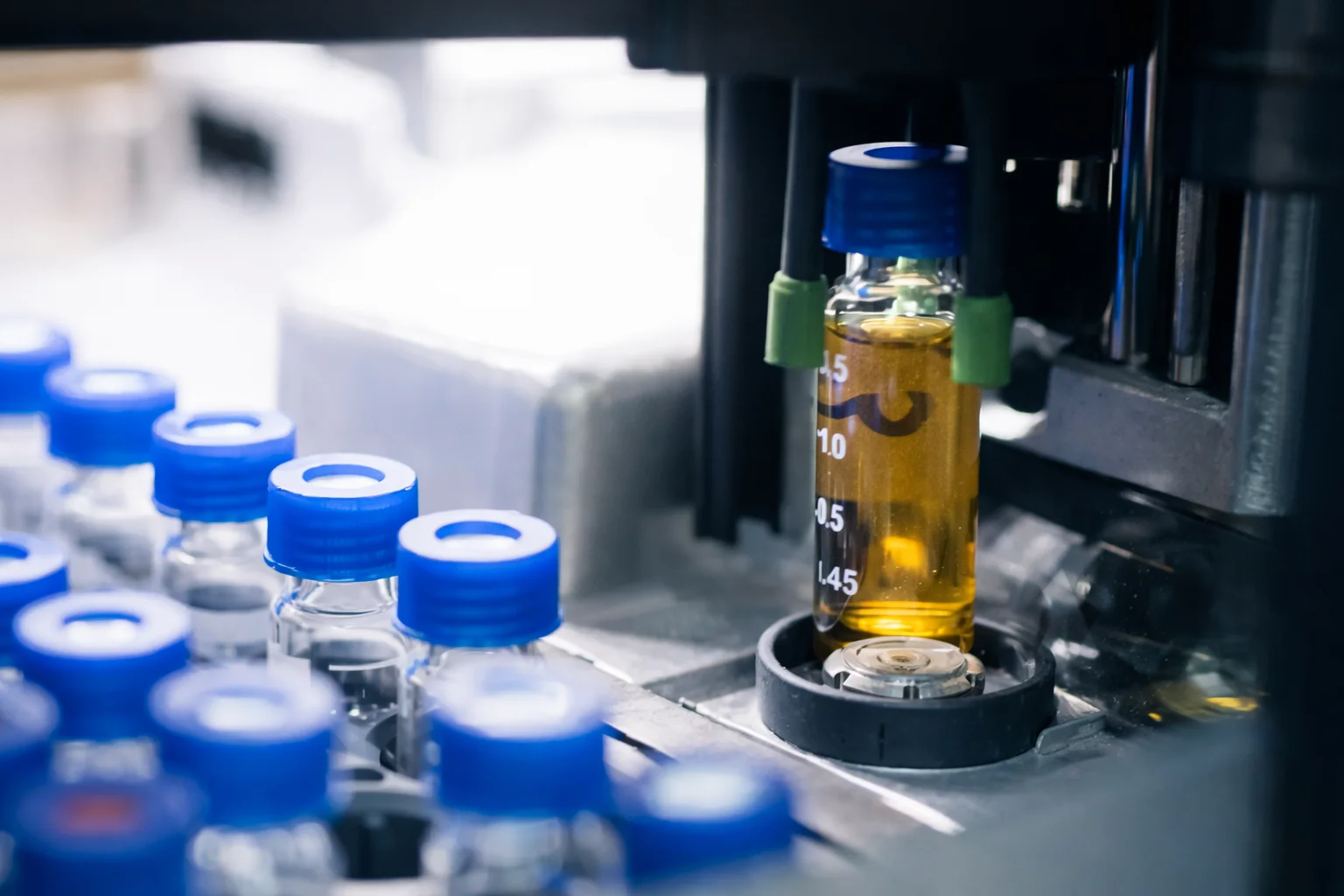
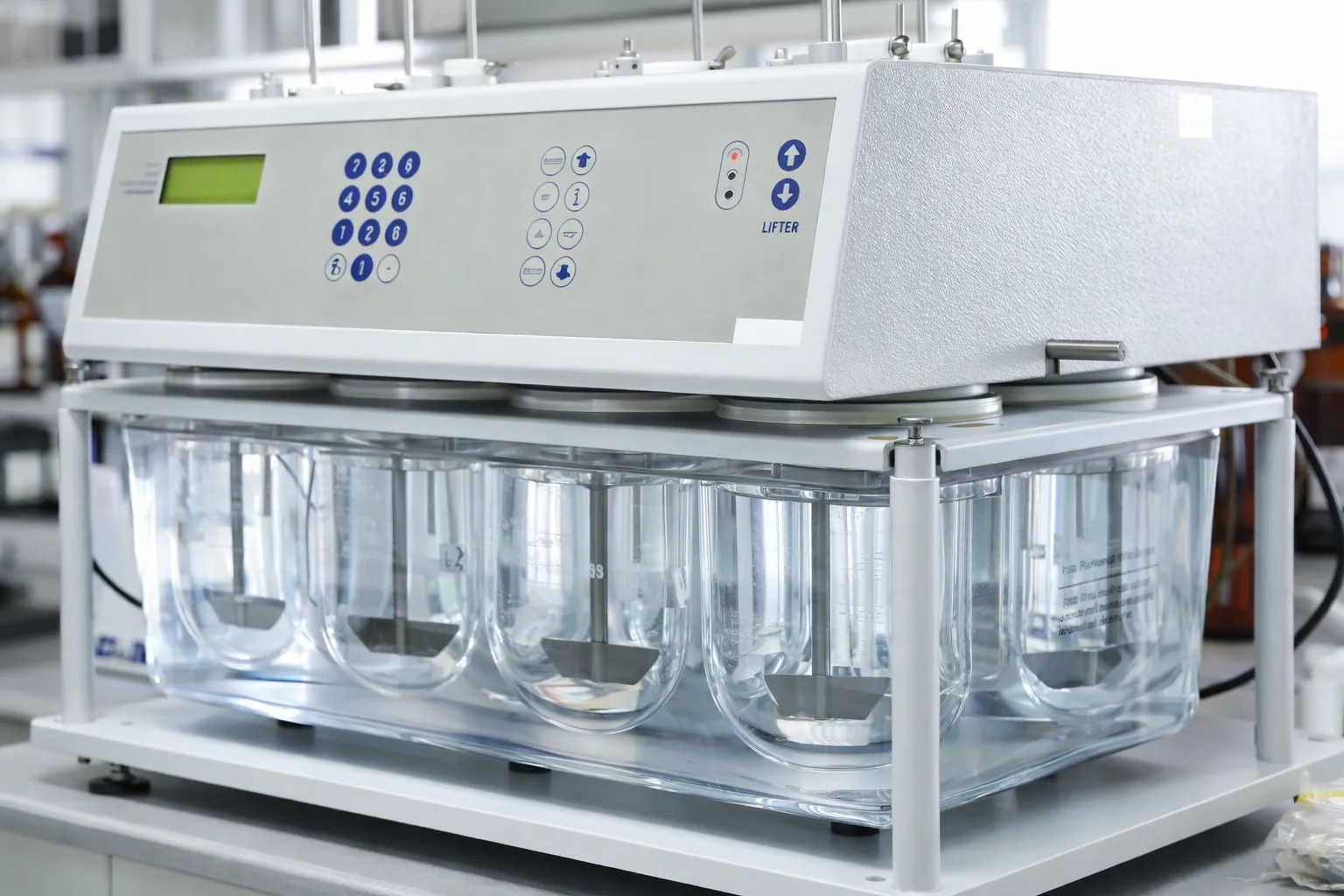
For tablets and capsules, dissolution is the single most important performance test, because it links formulation and process to in-vivo behaviour. The USP general chapter on dissolution provides the backbone: apparatus choices, media, temperature control, and acceptance approaches. Methods should be discriminating (able to see meaningful formulation or process changes) yet clinically relevant. For modified-release products, multiple media and time points may be required; for BCS II/IV drugs, surfactant or biorelevant media may be justified. A well-designed dissolution method functions as a control tool, not a hurdle.
Semi-solids: Microstructure, IVRT, IVPT
Creams, gels, and ointments with the same ingredients and quantities can still behave differently when their internal structure (Q3) is not the same. For that reason, teams fingerprint rheology (yield stress, thixotropy), droplet or particle size, crystal form, and phase ratios, and then link those features to in-vitro release testing (IVRT). Where permeation matters for locally acting dermal products, in-vitro permeation testing (IVPT) adds the skin-flux view. FDA guidance outlines how IVPT supports bioequivalence for ANDAs and how to design and analyse IVPT and IVRT properly. When the link between microstructure and release is clear, development runs smoother and post-approval changes are easier to justify.
Liquids and Parenterals: Particles, Droplets, Sterility
In solutions, clarity and colour are the basics; in suspensions and emulsions, particle and droplet size distributions govern both stability and performance. For parenterals, sterility assurance, container–closure integrity, and sub-visible particle limits are central. Bacterial endotoxin testing follows compendial approaches; the aim is a controlled process with testing as confirmation. Particulate monitoring is paired with upstream controls—filters, shear profiles, and hold times—and results are trended across batches so investigations remain fact-finding rather than firefighting.
Microbiology and Preservation
Non-sterile aqueous multi-dose products must resist contamination during real use. USP <51> (also called PET or AET) describes a preservative challenge test in which the product is inoculated with defined organisms and the kill is tracked at set time points. A key point is that preservatives partition: they may adsorb into plastics, reside in the oil phase of emulsions, or bind to polymers. Without measuring these effects, a product can pass one study and fail in practice. For sterile products, sterility testing, bacterial endotoxin testing (BET), and microbial limits sit alongside process validation and media fills; both the tests and the validated process are needed for a complete picture.

Elemental Impurities and Nitrosamines
Elemental impurities are now basic hygiene: ICH Q3D(R2) defines permitted daily exposures for different routes, and FDA’s aligned guidance explains application. Programs generally start with a risk assessment and then confirm with ICP-MS where risk is not negligible. Nitrosamines have moved from surprise to routine control. FDA provides recommended acceptable intake limits, including a framework for N-nitrosamine drug substance-related impurities (NDSRIs); the revised guidance on control of nitrosamines updates expectations. Analytical capability (LC-MS/GC-MS) is necessary, but the real strength is a calm, documented risk position that gets updated as guidance evolves.
General Offerings of CDMOs in Drug Product Characterization
Characterization and testing succeed when lab capability, method discipline, and regulatory literacy come together. A good partner does more than “run tests.” The role is to design suitable methods, generate reliable data at the right time, and convert those data into clear decisions for development, filing, and manufacturing. The scope usually spans method work, dosage-form specific characterization, microbiology, stability, and a set of special risk studies such as elemental impurities, nitrosamines, and extractables/leachables.
Method Development, Validation, and Transfer
Method programs usually start lean to support early formulation screens and toxicology batches, then expand into full, stability-indicating methods as programs approach pivotal studies. Phase-appropriate practice matters: in discovery and preclinical, fast and selective methods keep decisions moving; as clinical phases progress, methods are tightened and validated against the expected matrix and stress pathways. Validation follows standard attributes—specificity, accuracy, precision, range, detection/quantitation limits, and robustness—scaled to phase so time and material are not wasted. Transfer packages are written with enough detail that a receiving QC lab can reproduce performance without prolonged troubleshooting; this includes practical choices of columns and reagents, system suitability that protects specificity, and sample-prep that works on routine shifts. Where multiple sites are involved, partners coordinate side-by-side tests and comparability protocols so methods behave consistently across the network.
Dosage-form Specific Characterization
Solid orals require dissolution method design that is both discriminating and clinically sensible, with media scouting, apparatus selection, and acceptance criteria built around the target profile. Content uniformity, hardness, friability, moisture, and, when relevant, imaging or polymorph checks round out performance. Liquids and parenterals bring a different toolset: particle and droplet size measurement to control physical stability, viscosity profiles for handling and dose delivery, osmolality and pH for patient comfort and compatibility, clarity/colour monitoring, sub-visible particulate counting for injectables, and sterility and endotoxin testing where applicable. Semi-solids are handled with rheology suites that map yield stress and thixotropy, microscopy to understand structure, and IVRT for release rate; when skin flux is relevant, IVPT adds the permeation lens with appropriate membranes and statistics. The better programs tie each test back to the target product profile, so specifications and ranges protect clinical performance rather than simply mirroring compendial numbers.
Microbiology and Preservative Support
Non-sterile, multi-dose aqueous products need a preservative strategy that survives real use. Partners typically run microbial limits and preservative efficacy tests, but the stronger offerings go a step further: measuring where preservatives actually sit in the formulation (water phase, oil phase, polymer-bound, or absorbed into plastics), then adjusting systems accordingly. In-use simulations are designed to reflect reality—repeated openings, device actuations, and home or ward storage—to avoid surprises in late stability or post-market settings. For sterile products, the service scope includes sterility testing, bacterial endotoxin testing, and container–closure integrity, paired with process validation and media fills so test results confirm, rather than substitute for, a robust aseptic or terminal process.
Stability Programs and Special Studies
Stability infrastructure covers ICH long-term and accelerated conditions, with photostability capacity, freeze–thaw challenges, and controlled temperature cycling for edge cases like emulsions or cold-chain risks. For products that face difficult logistics, shipping simulations are tailored to real lanes and dwell times, not generic profiles. Reporting is written for decisions: what changed, why it likely changed, and what action follows (specification, process, or packaging adjustment). Phase-appropriate staging keeps early programs light and informative and then deepens into registration-ready packages with clear shelf-life justifications and in-use statements.

Elemental impurities, nitrosamines, and extractables/leachables
Elemental impurities testing is typically delivered via ICP-MS with route-specific reporting against permitted daily exposures. Nitrosamine control has become a standard module: risk assessment that traces plausible formation pathways and contact points, followed by targeted LC-MS/GC-MS confirmation at suitable detection limits. Extractables/leachables are scoped based on materials of construction and product risk, often beginning with a paper assessment and focused extractables, then moving to leachables studies when warranted. What separates routine from excellent in this space is steady regulatory literacy—keeping methods current with evolving expectations—paired with clear, practical rationales that avoid over-testing while still protecting patients and filings.
Across these areas, the value of a CDMO/CRDMO lies in clear plans, reliable execution, and readable reports. Methods arrive when needed and mature alongside the program. Tests reflect dosage-form realities and patient use. Stability answers specific questions rather than piling up data without a purpose. Special risks are handled calmly with risk-based logic. The result is a characterization package that supports development speed, smooth transfers, and reviewer trust.
What Aurigene offers
Aurigene runs characterization as a science-first, data-first function. The labs are built around phase-appropriate methods, controlled environments, and modern instruments; the teams are used to working across NCEs and generics, including high-potent and tricky matrices; and the service model is geared to clean protocols, fast turnarounds, and regulator-ready reports. The aim is simple: reliable numbers that explain product behaviour and shorten decisions.
- USFDA-inspected labs with advanced instrumentation, stability chambers including photostability, and controlled rooms for analytical work
- HPLC and UPLC platforms with PDA, UV, MWD, ELSD, RI, and CAD detectors; GC with headspace; UV-visible spectrophotometers
- Dissolution capacity including small-volume rigs; Franz diffusion cells for semi-solid release studies; Brookfield viscometers for rheology
- Sophisticated tools: NMR 400 MHz, ICP-MS, DSC, TGA, FT-IR, ion chromatography, particle size analyser (Malvern Mastersizer 3000), Zetasizer (Nano-ZS), amino acid analyser, volumetric and coulometric Karl Fischer, preparative HPLC
- Stability chambers for developmental, clinical, and registration batches; refrigerators and water purification systems; balances, sonicators, shakers, centrifuges
- Dedicated High Potent Analytical Lab with isolator, filtered balance systems, pass box, fume hoods, and in-room HPLC/GC/Zetasizer for safe handling of cytotoxic/high potent products
- Analytical support to early preformulation and product development; phase-appropriate method development, validation, and transfer
- Stability analysis for developmental, clinical, and registration batches; photostability, IVRT for semi-solids, and standard compendial tests
- Full capability range: assay; degradants/related substances/impurities; dissolution; chiral purity; identity by UV/PDA/IR/TLC; polymorph ID; preservative and antioxidant content; content uniformity; water content and loss on drying; viscosity and acid neutralising capacity; visible and sub-visible particulate matter; residual solvents
- Microbiology: microbial limits including BCC, sterility, bacterial endotoxins (BET), antimicrobial effectiveness/preservative efficacy (AET/PET)
- Elemental impurities and nitrosamine impurities testing
- Standalone and custom packages: method development + validation; plus transfer; plus stability; verification and transfer of client methods
- Experience across NCEs, generics, and first generics; comfort with complex and diverse drug products
- Multidisciplinary team skilled on advanced instruments; phase-appropriate method development and validation aligned to pharmacopeial and regulatory expectations
- Use of digitised tools for experiment execution, data capture, documentation, change control, and training; clean traceability
- Dedicated project manager to drive milestones and communication
- Contained, specialised expertise for high potent/cytotoxic handling and testing; ability to manage UV-active and UV-inactive chromophores, small and large, polar molecules
Challenges in drug product development
A method can look strong in development yet falter in QC. The development lab often carries unwritten steps in muscle memory, while the receiving lab does not. Designing for transfer from the start avoids this gap: columns and reagents are chosen for global availability, system suitability protects specificity rather than vanity precision, and sample preparation reflects the pace and constraints of routine shifts. Treated as a small project—with dry runs and agreed acceptance criteria—transfer tends to land cleanly instead of consuming months.
Dissolution or IVRT methods can also miss the mark—either too dull to see meaningful differences or too jumpy to ignore harmless noise. A better path is built around likely failure modes, with discriminating conditions that still reflect clinical relevance. For topical products, early alignment with established IVRT/IVPT design and statistics prevents later rewrites and helps the method serve as a dependable control tool.
Repeated preservative efficacy failures often point to distribution rather than selection. Preservatives may sit in the bottle plastic, partition into an oil phase, or bind to polymers, leaving the aqueous phase under-protected. When phase distribution and contact-material losses are measured and factored into the design, systems stay active where needed. In-use simulations that mirror real handling—multiple openings, device actuations, typical home or ward storage—close the remaining gap.
Concerns around nitrosamines and elemental impurities are best handled by steady, risk-based discipline. A written assessment anchored to current guidance, reviewed on a set cadence, leads to targeted testing where risk is non-negligible and avoids blanket panels where it is not. Acceptable intake lixmits and permitted daily exposures remain clearly justified in the file, signalling thoughtful control rather than guesswork.
Sub-visible particle variability in injectables is often a process story. Counts swing when filters, pump shear, tubing sets, hold times, or temperature vary. Framed as an engineering problem, these factors are mapped and stabilised; sampling and analysis are standardised to avoid artefacts. With results trended by lot and by line, investigations proceed with context, and corrective actions close faster.
Emerging trends in drug product characterization
Model-informed characterization
Small, practical models are moving into daily work. Solubility–pH and co-solvent models guide media and specs; simple diffusion models tie semi-solid microstructure to IVRT/IVPT; PBPK/PBBM links dissolution or release profiles to exposure. The net effect is fewer trial-and-error loops, faster, defendable decisions.
Q3-led control for complex products
For creams, gels, and ointments, the internal structure (droplet/particle size, rheology, crystal form) is treated as a first-class attribute. Microstructure “fingerprints” are tracked alongside IVRT/IVPT so sameness can be shown without always running new clinical work.
Release testing that’s closer to the clinic
Biorelevant dissolution media, surfactant screens, two-stage gastric–intestinal setups, and apparatus choices that reflect real hydrodynamics are becoming routine. For modified-release, method design now starts from clinical relevance rather than compendial convenience.
In-use simulation as a standard tool
Beyond static PET and label storage, teams simulate real handling: repeated openings, device actuations, oral-syringe use, tip hygiene, at-home temperatures. These studies are increasingly paired with mass-balance work on preservative partitioning to prevent late surprises.
Deterministic integrity and particulate control
For injectables, deterministic container-closure integrity tests, improved sub-visible particle analytics (including proteinaceous particles), and tighter upstream controls (filters, shear, tubing, hold times) are replacing reactive investigations with engineered prevention.
Accelerated predictive stability (APS) and smarter stability design
Short, high-stress studies plus kinetic modelling are used early to rank risks and pick packs, then verified under ICH conditions. Stability plans now state the decision each leg will inform, cutting “data with no decision”.
Risk-based elemental impurities and nitrosamines
Living risk assessments—updated on a schedule—drive targeted ICP-MS and LC/GC-MS testing. Focus has shifted from blanket panels to route-aware, process-aware control with clear justifications that age well as guidance evolves.

Digital quality and data utilities
Electronic batch records, structured deviations, and routine trending of PET, dissolution/IVRT, dose-delivery, and particle counts surface weak signals early. Lightweight dashboards shorten CAPA; raw data capture (chromatography, rheology) is set up for easy review and tech transfer.
Miniaturised/throughput-friendly methods
Micro-dissolution, small-volume IVRT cells, fast UPLC runs, and multiplexed sample prep let teams screen more conditions with less API—useful in early development and for scarce high-potent programs.
Automation, PAT, and chemometrics
Benchtop robotics for sample prep, inline/at-line sensors (NIR, Raman, focused beam reflectance) and chemometric models are creeping from process development into characterization labs, giving quicker feedback and better batch-to-batch comparability.
Device–product integrated testing
For liquids, nasal/otic sprays, pumps, and oral syringes, dose-delivery and plume/spray pattern tests are being tied to formulation attributes and in-use profiles. The device is treated as part of the product, not an afterthought.
E&L with real-product context
Extractables/leachables are planned with the actual matrix, contact time, and temperature in mind. Early, risk-based scoping narrows later leachables studies; sorption and preservative loss to plastics are measured rather than assumed.
Preservative-lean, process-clean designs
Where science allows, lower preservative loads are achieved via cleaner processes, closed systems, and better closures/adapters. PET remains, but paired with realistic use simulations to keep labels simple and patient-friendly.
Advanced analytics for solids
Better polymorph and crystallinity mapping (XRPD/DSC/solid-state NMR when needed), moisture-mechanical profiling, and tablet mechanical modeling help lock dissolution performance and reduce lot-to-lot drift.
Biotherapeutic-aware characterization
For protein and peptide products, aggregation pathways, visible and sub-visible particles, and container interactions are profiled with orthogonal methods. Stress-mapping early helps avoid late surprises with pumps or syringes.
Continuous manufacturing and comparability
As continuous lines scale, characterization shifts to more frequent, smaller-sample testing and real-time release analytics. Comparability packages rely on trend behaviour rather than isolated time points.
Data stories that read like decisions
A softer trend but important: reports are written to explain “what changed, why it changed, and what action follows”. This improves internal decisions and reviewer trust, and cuts cycles during transfer or variation filings.
Characterization work is the part of the journey that keeps the promise honest. A label is only a sentence until you back it with data that shows the same behaviour today, tomorrow, and a year from now—under heat and cold, in a clinic and at home, in the hands of a careful pharmacist and a sleepy parent. Done well, the studies do not drown you in numbers; they give you a picture that is simple enough to act on and good enough to trust. If you organise the program that way—right tests, right time, clear link to decisions—you get fewer surprises, faster approvals, and a product that behaves like a medicine should.