

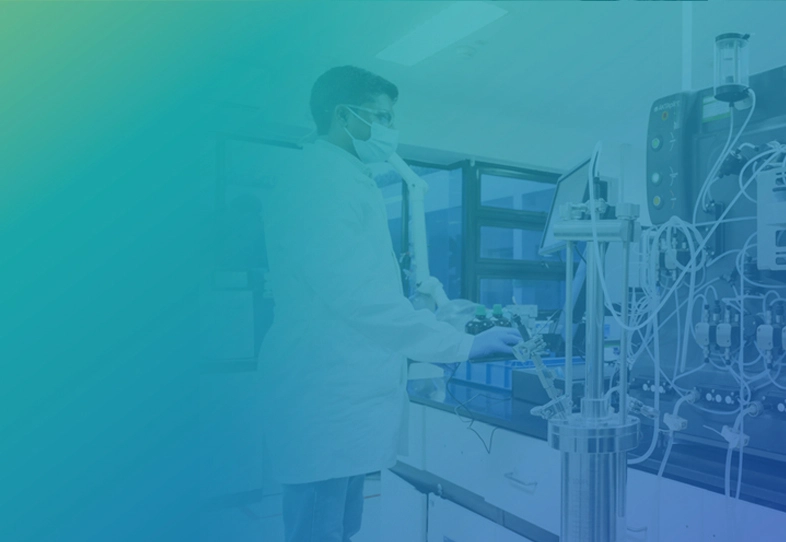
While carbohydrates have the potential to develop various therapeutic drugs, an inherent structural complexity exits in developing these molecules. At Aurigene, we have a rich track record of having worked on all classes of carbohydrates such as monosaccharides, polysaccharides, iminosugars, carbocyclic sugars, nucleosides, locked nucleic acids (LNAs), glycopeptides, and thioglycosides. We have capabilities across complex multi-step carbohydrates involving linear and convergent synthesis, selective protection and deprotection, control of selectivity in moisture-sensitive glycosylation, handling of triflates, azide transfer, and oxidations. We also have hands-on experience in the use of glycosyl donors like SMethyl and STolyl and have capabilities in downstream purification and isolation involving water-soluble intermediates.
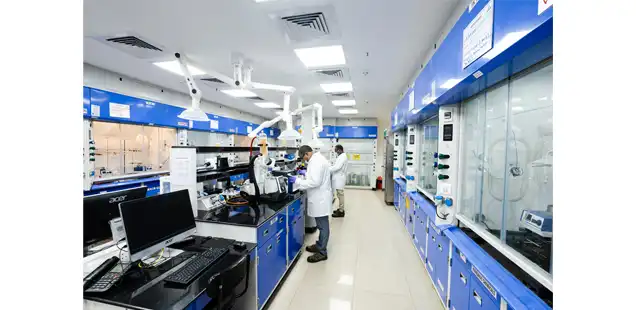
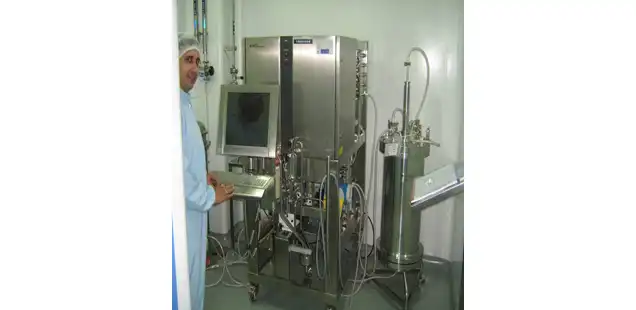
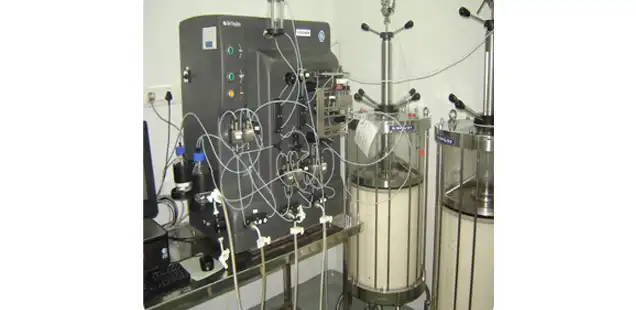
Lab Infrastructure
We have lab-scale operations of up to 100 grams per batch. Our purification infrastructure at the lab scale includes:
- 1 Akta explorer ion exchange chromatography
- 1 Aktaprime plus ion exchange chromatography
- Gel permeation chromatography columns
Isolation techniques
We have distillation, precipitation, and lyophilization techniques for isolation. For lyophilization, we have Virtis Programmable Tray 3 L Capacity & Virtis Benchtop 4 L Capacity.
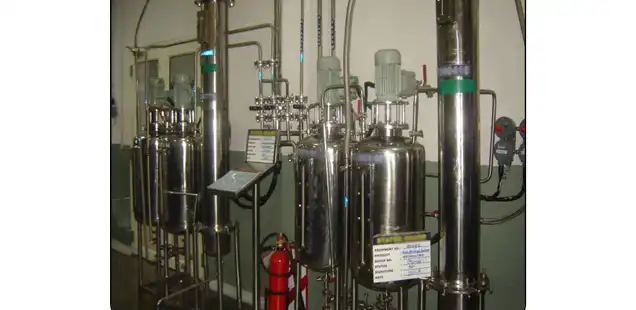
Manufacturing Infrastructure
Carbohydrates are manufactured in Hyderabad (CTO-2) and Visakhapatnam (CTO-6 and CTO-SEZ).
- Telescoping operations at a commercial scale
- Operation efficiency to remove chromatographic separation and use of simple techniques to limit impurities such as solubility and solvent-based extractions
- C-18 purification (up to 2 Kg of crude compound)
- Gel permeation chromatography (GPC) purification
- Size exclusion chromatography
- Strong anion exchange (SAX) purification
- Water for injection (WFI)
Analytical Capability
We have advanced analytical tools for the characterization of carbohydrates.
Less or no chromophore substrates
- Evaporative Light Scattering Detection
- Refractive Index (RI)
- CAD detector
- Low wavelength UV detection
Highly polar substrates
- Range of specialized carbohydrate columns
- Ion exchange chromatography for polar moieties
Analysis of counter ions such as Na+, K+, SO42- SO32-
- Ion chromatography by conductivity detection
Characterization of API and its impurities by
- LC-QqQ-MS, LC-ToF instruments for characterization
- 600 MHz Nuclear Magnetic Resonance Spectrometry
Why Aurigene Carbohydrate Development and Manufacturing Services?

Experience of 20+ years

Comprehensive infrastructure at lab and plant for a full suite of services

State-of-the-art PAT tools and QbD approach to support optimization

Phase-appropriate development approach
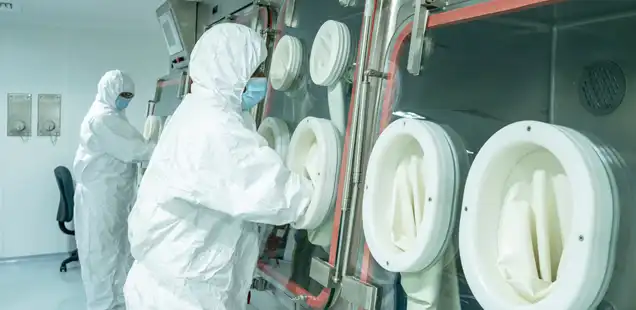
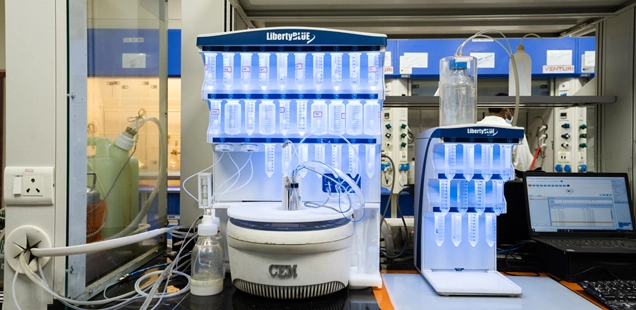
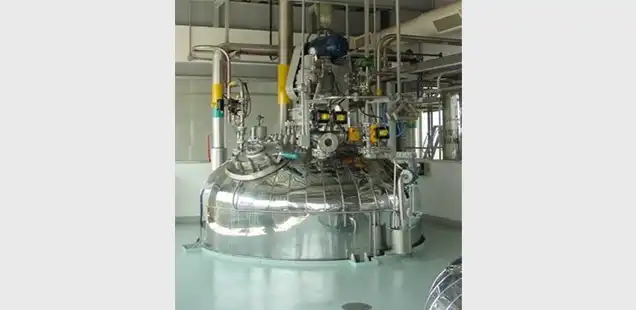
Virtual Tour
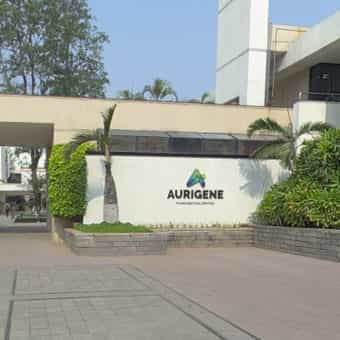

Hyderabad R and D Center

Bangalore R and D Center
Connect with our scientific experts for your drug discovery, development, and manufacturing needs
We understand that clear communication is essential to successful collaborations, and that's why we have a dedicated team that is always ready to help you. Whether you have questions about our services, want to discuss a potential partnership, or simply want to learn more about our company, we're here to help.
Our team of experts is dedicated to providing personalised solutions tailored to your unique needs. So, please don't hesitate to reach out to us. We look forward to hearing from you and helping you achieve your business goals.
Learning Resources

MAY 19, 2023
“Bathtub Chemistry” - Necessity and Aspects of Process Research
Medicine is an essential part of our life. Since ancient time human civilization has been tirelessly engaged to understand the cause and effect of a disease. Sometimes they win and many times they lose. But the story of their curiosity and enthusiasm is a never damping process. On the contrary it increases day by day, year after year.Drug discovery is a vast and ...
Read More
HPAPI Molecule from Development to Market
The global Highly Potent Active Pharmaceutical Ingredients (HPAPI) market is expected to reach USD 26.84 Billion by 2023 from USD 17.72 Billion in 2018, at a CAGR 8.7%....
Read More
Cell Line Development
We enable development of stable and high yielding recombinant Mammalian and Microbial lines. ...
Read More
Advancing a target molecule from in vitro studies to clinical supply: An innovative scientific solution
Background: A biotech firm based in the USA contacted us to assist with the development and rapid supply of a non-GMP drug substance. This drug substance has been identified as a promising candidate for an anti-viral treatment. The synthesis of this drug substance involved various complexities, including process requirements, safety considerations, purification c...
Read More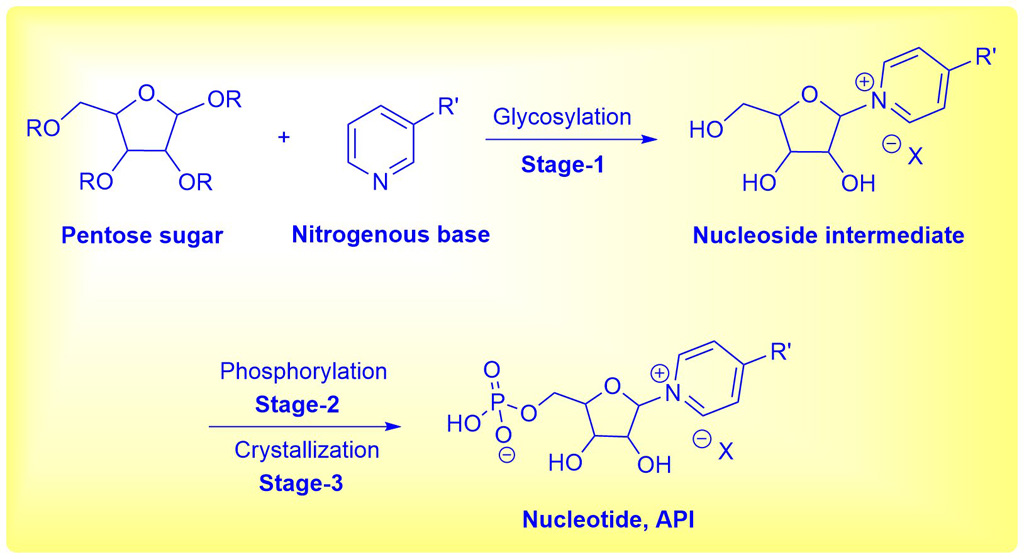
August 28, 2020
Base mediated spirocyclization of quinazoline: one-step synthesis of spiro-isoindolinone dihydroquinazolinones
A novel approach for the spiro-isoindolinone dihydroquinazolinones has been demonstrated from 2- aminobenzamide and 2-cyanomethyl benzoate in the presence of KHMDS as a base to get moderate yields. The reaction has been screened in various bases followed by solvents and a gram scale reaction has also been executed under the given conditions. Based on the controll...
Read More-
April 21, 2026
H2SO4-SiO2 catalyzed synthesis, in silico and in vitro evaluation of quinazoline-based fused tetracyclic derivatives as new inhibitors of PDE4B
The 6,6a-dihydro-5H-isoquinolino[2,3-a]quinazoline-5,7,12-trione (DIQT) derivatives (that belong to the quinazoline-based fused tetracyclic class of compounds) though known in the literature, their biological properties have not been explored previously. In the current study, we have explored the phosphodiesterase 4B (PDE4B, an important target for the identifica...
Read More -
January 31, 2025
Development and assessment of a Bcs class II - SGLT2 (Sodium Glucose Cotransporter 2) inhibitor drug in the form of solid lipid Nanoparticles by selecting different lipids, co-surfactants, and manufacturing techniques
Drug Delivery System (DDS) has been used successfully in the past few decades to cure illnesses and enhance health because of its improved systemic circulation and ability to regulate the drug's pharmacological action. As pharmacology and pharmacokinetics advanced, the idea of controlled release emerged, demonstrating the significance of drug release in assessing...
Read More -
January 31, 2025
Development of novel paullone-based PROTACs as anticancer agents
Proteolysis-targeting chimera (PROTACs) represents a promising modality that has gained significant attention for cancer treatment. Using PROTAC technology, we synthesized novel structurally modified paullone-based PROTACs using Cereblon (CRBN) and Von Hippel–Lindau (VHL) E3 ligands....
Read More
Frequently asked questions
What makes carbohydrate synthesis harder to scale than conventional small-molecule chemistry?
Carbohydrate synthesis is harder because each sugar carries several similar hydroxyl groups, forcing extensive protecting-group manipulation and long, low-yielding sequences. Every glycosidic bond must form with the right stereochemistry, and holding anomeric selectivity at scale — reproducing α/β ratios reliably in large batches — is difficult. Products are polar, water-soluble and hard to crystallise, so purifying closely related isomers becomes the recurring scale-up bottleneck.
How are oligosaccharides made at manufacturing scale — chemical, enzymatic or chemoenzymatic routes?
Three routes are used for oligosaccharide synthesis. Chemical synthesis of oligosaccharides uses protecting groups and glycosyl donors for full structural control, but is step-intensive. Enzymatic routes use glycosyltransferases or glycosidases for high stereoselectivity with few protecting groups, though enzyme availability limits them. Chemoenzymatic oligosaccharide synthesis combines both — chemistry builds the core, enzymes install defined linkages — and is increasingly the practical choice for complex targets at manufacturing scale.
How are carbohydrate APIs characterised and released when the critical impurities are co-eluting isomers?
When the critical impurities are co-eluting isomers, single-method release is not enough. Carbohydrate impurity profiling uses orthogonal, high-resolution methods — HPAEC-PAD, LC-MS, multi-column or 2D HPLC, and NMR — that separate species one technique alone misses. Reference standards for known isomers, plus mass and structural confirmation, enable accurate quantitation. The release specification combines these orthogonal methods so co-eluting related substances are resolved, identified and controlled to defined limits.
Where are synthetic carbohydrates used in today's pipelines — glycoconjugate vaccines, glyco-payloads, heparin analogues?
Synthetic carbohydrate applications span several fast-growing areas. Defined glycoconjugate vaccine antigens replace variable isolated polysaccharides, giving consistent, well-characterised immunogens. Synthetic heparin oligosaccharides — such as fondaparinux-type pentasaccharides — offer pure, animal-free anticoagulants. Glyco-payloads and glycan linkers tune antibody-drug conjugates and targeting. Synthetic glycans also serve as biomarkers and reference standards — wherever a precisely defined, reproducible carbohydrate structure matters more than an extracted natural mixture.
What carbohydrate classes and scale ranges are supported under contract, from gram to commercial?
Carbohydrate contract manufacturing typically covers mono-, di- and oligosaccharides, glycosides, amino sugars, glycoconjugates and heparin-type structures. Scale runs from gram quantities for early research and reference standards, through kilogram clinical batches, to commercial supply. As a GMP carbohydrate manufacturer, the same site can take a target from route development and non-GMP delivery into GMP production, so complex glycochemistry is supported end-to-end under one contract.
If a molecule needs both the carbohydrate and the conjugation step, can both run under one contract?
Yes. Integrated carbohydrate development and manufacturing means the synthesised carbohydrate and its downstream conjugation run under a single contract and one project team. The glycan is built, purified and characterised, then carried straight into carbohydrate conjugation services — linking it to a carrier protein, peptide or payload — with no external hand-off. Keeping both steps on one site preserves material, protects IP and shortens timelines for glycoconjugates.
You are about to leave Aurigene Pharmaceutical Services and affiliates website. Aurigene Pharmaceutical Services assumes no responsibility for the information presented on the external website or any further links from such sites. These links are presented to you only as a convenience, and the inclusion of any link does not imply endorsement by Aurigene Pharmaceutical Services.
If you wish to continue to this external website, click Proceed.


Leaving already?
Don't forget to join us at
CPHI Worldwide 2023.
October 24th-26th, 2023 | Barcelona, Spain
Get ready to accelerate your drug’s journey to the market