

We are committed to the highest standards of Environment, Health, and Safety. We follow a robust and systematic approach to ensure risk assessment and safety studies. In addition, we evaluate alternative options to adopt safer processes throughout our research from development to manufacturing and safe handling of powders.
We offer process and powder safety assessment studies prior to manufacturing, irrespective of the phase of the molecule.


Safety Assessment using Literature and Database
- Review of the synthetic scheme for the potential hazards' functionalities and gaseous by-products
- Assessing the hazardous nature of reagents or solvents used for the conversions by referring to the available data such as material safety data sheet (MSDS) and Brethrick's handbook of reactive chemical hazards. Review of the reaction parameters such as temperature and pressure
Safety Assessment : Screening Tests and Instruments
- Basic safety screening tests which include:
- Differential scanning calorimetry (DSC) for reaction masses, organic layers, mixtures, intermediates, etc.
- Thermal Screening Unit (TSU) studies
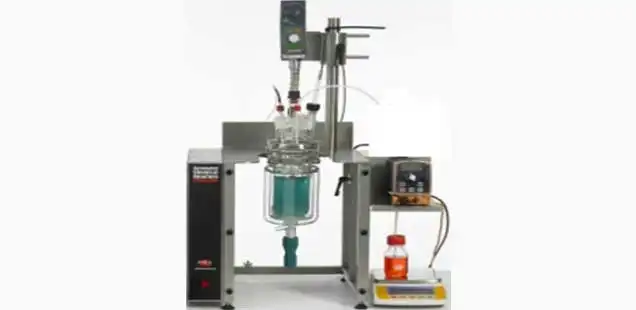
- Reaction Calorimetry (RC1mx)
- Accelerating Rate Calorimetry (ARC)
- Powder safety studies which include:
- Minimum ignition energy (MIE)
- Bulk powder resistivity test
- BAM Fall Hammer test
- Burning behavior
- Dust explosion
Why Aurigene Process and Powder Safety Assessment and Studies?

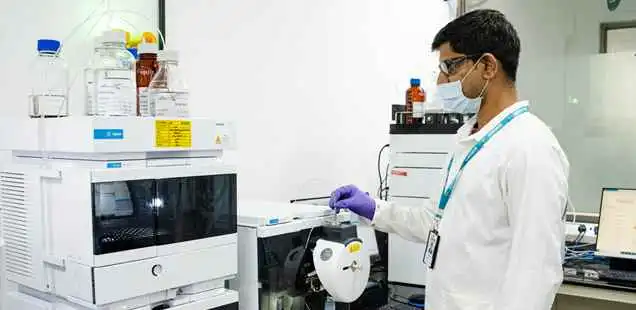
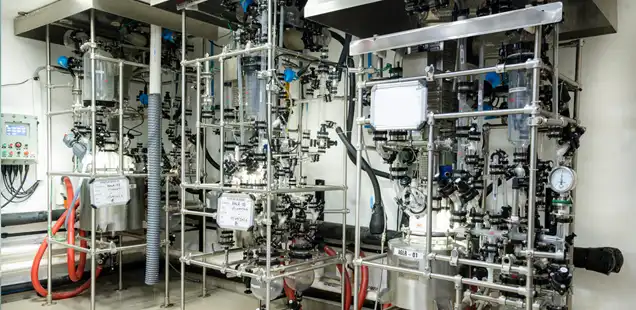
Safety evaluation labs with infrastructure to support calorimetry, thermal screening and powder safety

Stringent SOPs for risk evaluation and stage wise risk assessment and safety reports

Assessed 500+ compounds
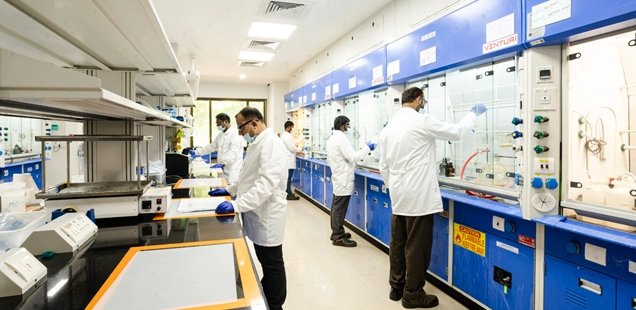
Virtual Tour

Hyderabad R and D Center
Bangalore R and D Center
Connect with our scientific experts for your drug discovery, development, and manufacturing needs
We understand that clear communication is essential to successful collaborations, and that's why we have a dedicated team that is always ready to help you. Whether you have questions about our services, want to discuss a potential partnership, or simply want to learn more about our company, we're here to help.
Our team of experts is dedicated to providing personalised solutions tailored to your unique needs. So, please don't hesitate to reach out to us. We look forward to hearing from you and helping you achieve your business goals.
Learning Resources
JULY 03, 2026
The journey from Scientific Insight to Patient Impact
Home › Company › Aurigene 360°: The Journey from Scientific Insight to Patient ImpactPublish on : January 25, 2026 Shares:Every medicine begins with a question.Sometimes with a scientist studying a protein structure late at night.Sometimes with a disease that still has no effective treatment.Sometimes with a simple thought:"What if we could design something ...
Read More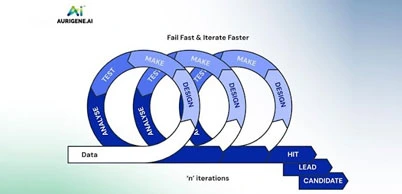

Accelerating Drug Discovery Through Innovative Partnerships
Genomics plays a vital role in identifying which gene is associated with a specific disease. A gene called CNOT1 is for example known for it's effect on brain development and for impairing memory and learning. Despite the great promise genomics provides in understanding the disease, genes are not the best drug targets....
Read More
Physiochemical Characterization Services
Backed by our strong chemistry, we enable “Finger-print” protein structure and functional characterization for proteins from naked proteins to hyperglycosylated or derivatized proteins. ...
Read More
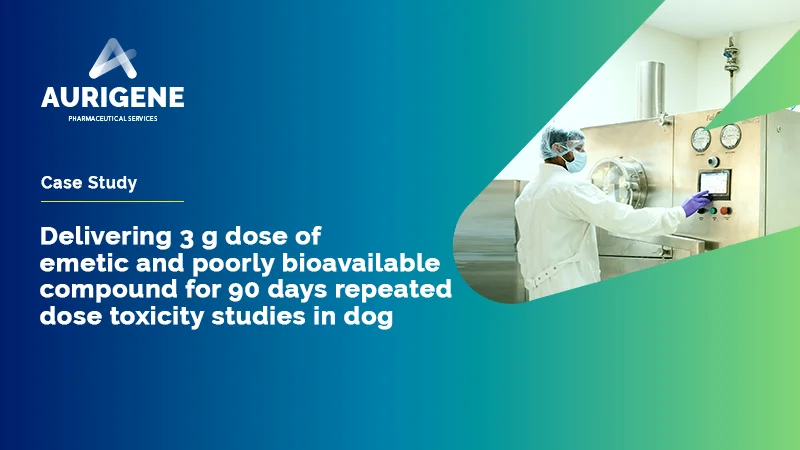
Delivering 3 g dose of emetic and poorly bioavailable compound for 90 days repeated dose toxicity studies in dog
Background: Develop oral liquid dosage form of an IND candidate (small molecule) suitable for chronic toxicology studies in dogs. Must meet required systemic exposure and shall be dose proportional. Developed vehicle or used excipients shall be safe for chronic preclinical toxicology studies in dog. Challenges: Conventional suspension in dog resulted in low oral ...
Read More
August 28, 2020
Construction of a quinoline ring via a 3-component reaction in water: crystal structure analysis and H-bonding patterns of a 2-aryl quinoline
Montmorillonite K-10 mediated green and one-pot synthesis of 2-substituted quinolines has been accomplished via a 3-component reaction of aniline, aldehydes and ethyl 3,3- diethoxypropionate in the presence of air oxygen in water. The crystal structure analysis and H-bonding patterns of one compound prepared are presented. ...
Read More-
April 21, 2026
H2SO4-SiO2 catalyzed synthesis, in silico and in vitro evaluation of quinazoline-based fused tetracyclic derivatives as new inhibitors of PDE4B
The 6,6a-dihydro-5H-isoquinolino[2,3-a]quinazoline-5,7,12-trione (DIQT) derivatives (that belong to the quinazoline-based fused tetracyclic class of compounds) though known in the literature, their biological properties have not been explored previously. In the current study, we have explored the phosphodiesterase 4B (PDE4B, an important target for the identifica...
Read More -
January 31, 2025
Development and assessment of a Bcs class II - SGLT2 (Sodium Glucose Cotransporter 2) inhibitor drug in the form of solid lipid Nanoparticles by selecting different lipids, co-surfactants, and manufacturing techniques
Drug Delivery System (DDS) has been used successfully in the past few decades to cure illnesses and enhance health because of its improved systemic circulation and ability to regulate the drug's pharmacological action. As pharmacology and pharmacokinetics advanced, the idea of controlled release emerged, demonstrating the significance of drug release in assessing...
Read More -
January 31, 2025
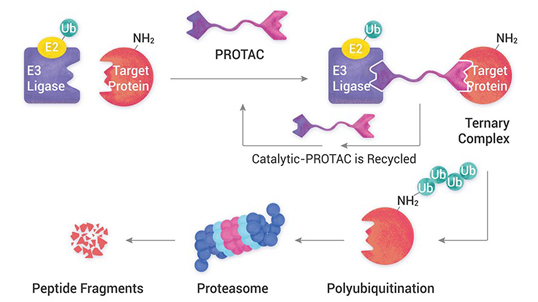
Development of novel paullone-based PROTACs as anticancer agents
Proteolysis-targeting chimera (PROTACs) represents a promising modality that has gained significant attention for cancer treatment. Using PROTAC technology, we synthesized novel structurally modified paullone-based PROTACs using Cereblon (CRBN) and Von Hippel–Lindau (VHL) E3 ligands....
Read More
Frequently asked questions
What is a process safety assessment, and which tests does an API process need before scale-up?
A process safety assessment evaluates the chemical process safety hazards of a reaction before scale-up — thermal stability, reaction energy and gas evolution. Core tests include reaction calorimetry (heat release), DSC and adiabatic screening (decomposition), and thermal-stability studies on intermediates and process streams. For solids handling, a combined process and powder safety assessment adds dust-explosivity and self-heating testing, so both the chemistry and the powder are proven safe to scale.
What do MTSR, TMRad and Stoessel criticality class mean, and how do they decide whether a step can scale?
MTSR (Maximum Temperature of the Synthesis Reaction) is the peak temperature reached if cooling fails; TMRad (Time to Maximum Rate under adiabatic conditions) is how long until a thermal runaway accelerates. Reaction calorimetry supplies both. The Stoessel criticality class (1–5) ranks a step by comparing process temperature, MTSR, boiling point and decomposition onset — higher classes mean greater runaway risk and decide whether the step can safely scale.
How does process hazard analysis for pharmaceutical manufacturing differ from OSHA-style industrial process safety management?
Pharma process hazard analysis centres on reaction chemistry — thermal runaway, gas release, dust explosion and unstable intermediates — across many small, frequently changing batch processes over a molecule's lifecycle. OSHA-style Process Safety Management (29 CFR 1910.119) is a compliance framework triggered by threshold quantities of listed hazardous chemicals in fixed, continuous plants. Process safety in the pharmaceutical industry applies PSM principles but is driven by chemistry and GMP, not inventory thresholds.
Are process and powder safety assessments available as a standalone service, or only within a development programme?
Both. Process safety assessment services and powder safety assessment services are offered as a standalone, contract package — send a defined route or a single problem step and receive a full thermal and dust-hazard evaluation with a report and scale-up recommendations. They also run embedded within a development programme, where the safety data feeds directly into route design. A contract process safety assessment suits externally developed processes that need independent review.
Can a safety assessment be run on a process developed elsewhere, before it is transferred in?
Yes — running a safety assessment before tech transfer is standard practice. Working from the incoming batch records and route, the team evaluates reaction thermodynamics, thermal stability and powder hazards, flags any steps that are unsafe at target scale, and recommends controls or route changes. Completing this ahead of API process tech transfer in India de-risks the first on-site campaign and prevents surprises during scale-up.
You are about to leave Aurigene Pharmaceutical Services and affiliates website. Aurigene Pharmaceutical Services assumes no responsibility for the information presented on the external website or any further links from such sites. These links are presented to you only as a convenience, and the inclusion of any link does not imply endorsement by Aurigene Pharmaceutical Services.
If you wish to continue to this external website, click Proceed.


Leaving already?
Don't forget to join us at
CPHI Worldwide 2023.
October 24th-26th, 2023 | Barcelona, Spain
Get ready to accelerate your drug’s journey to the market