


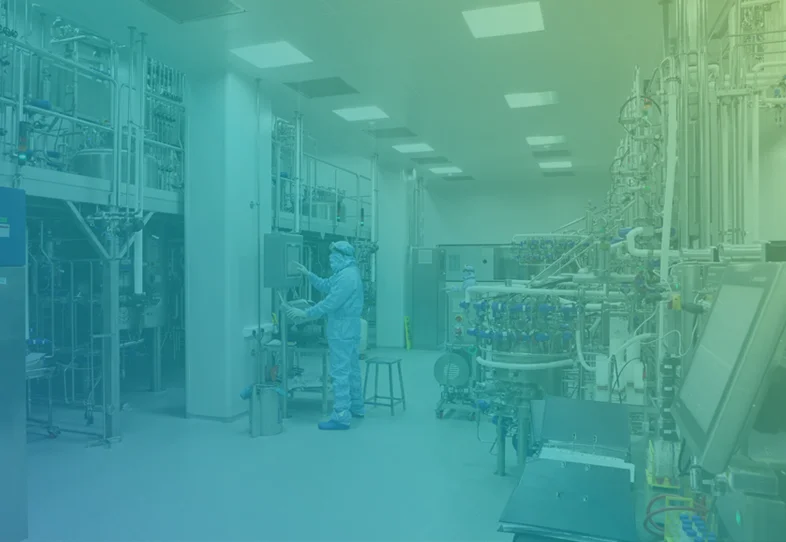
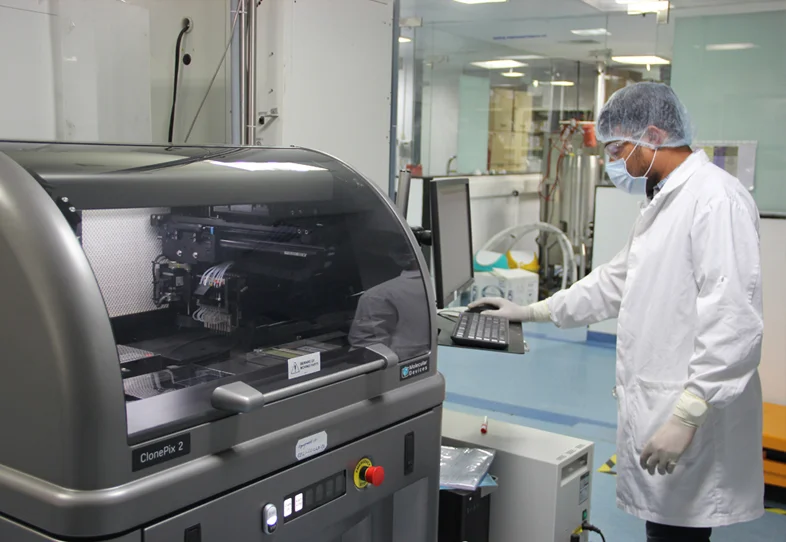
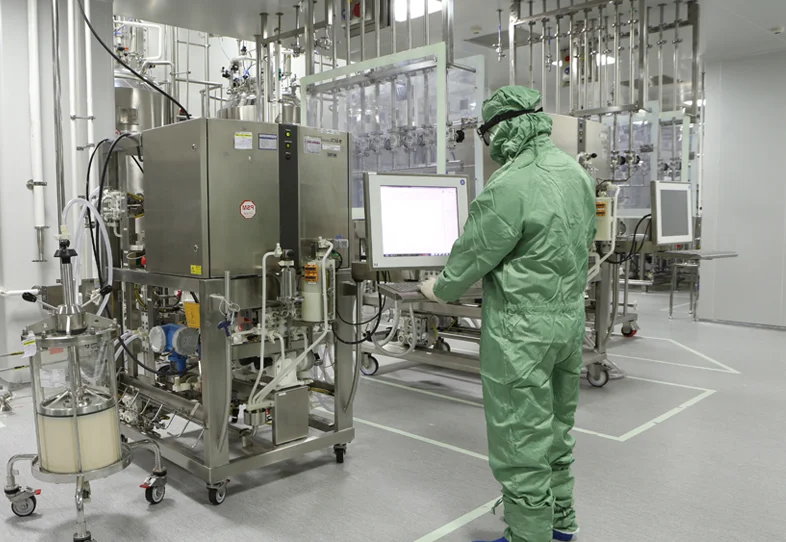
With over 10,000 Sq.m of fill finish footprint, we can support filling of a wide range of presentations - vials (liquid and lyophilized), pre-filled syringes and autoinjectors.
Our automated facility for fill finish services efficiently handles high-accuracy, high-viscosity, low-volume protein filing. End-to-end single-use capability enables for faster change over and assurance of cleaning validation.
Our integrated approach to quality management systems enables greater flexibility and leverage pan - organization experience in managing regulatory audits.
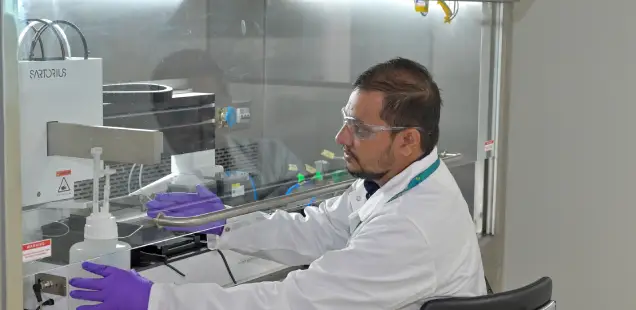
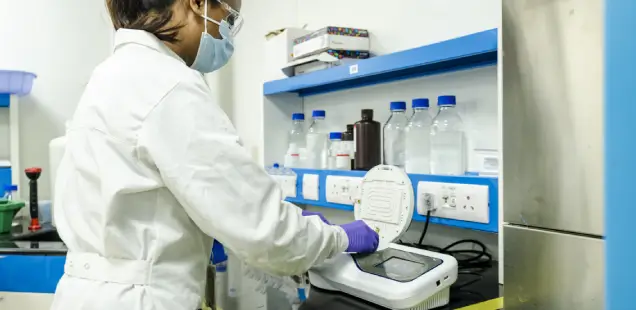
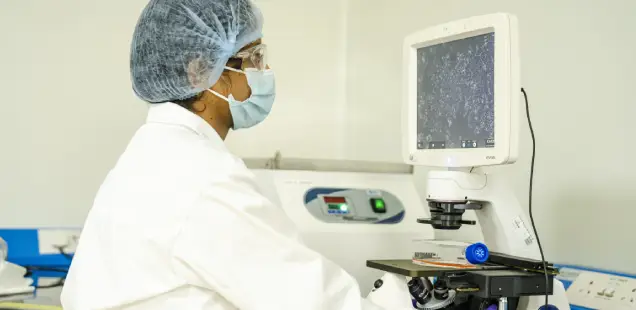
Fill Range and Presentation
Fill range is 0.1-100 ml, Vials: 2-100 ml, PFS and auto injector: 0.1-1 ml
Manufacturing Process Flexibility and Formulation
- Manufacturing process flexibility: peristaltic, rotary piston, end-of-end single-use system, sterile filling
- Formulation: liquid, lyophilized
Why Aurigene Fill Finish Development and Manufacturing Services?

100+ successful regulatory audits

10+K Sq.m facility footprints

300+ tech operations professionals

Operations supported by digital infrastructure
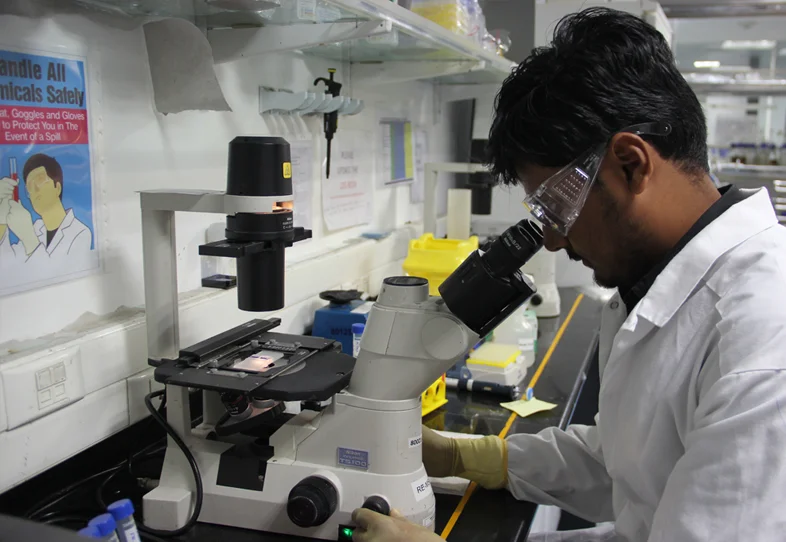
Virtual Tour

Hyderabad R and D Center

Bangalore R and D Center
Connect with our scientific experts for your drug discovery, development, and manufacturing needs
We understand that clear communication is essential to successful collaborations, and that's why we have a dedicated team that is always ready to help you. Whether you have questions about our services, want to discuss a potential partnership, or simply want to learn more about our company, we're here to help.
Our team of experts is dedicated to providing personalised solutions tailored to your unique needs. So, please don't hesitate to reach out to us. We look forward to hearing from you and helping you achieve your business goals.
Learning Resources

MAY 19, 2023
“Bathtub Chemistry” - Necessity and Aspects of Process Research
Medicine is an essential part of our life. Since ancient time human civilization has been tirelessly engaged to understand the cause and effect of a disease. Sometimes they win and many times they lose. But the story of their curiosity and enthusiasm is a never damping process. On the contrary it increases day by day, year after year.Drug discovery is a vast and ...
Read More
HPAPI Molecule from Development to Market
The global Highly Potent Active Pharmaceutical Ingredients (HPAPI) market is expected to reach USD 26.84 Billion by 2023 from USD 17.72 Billion in 2018, at a CAGR 8.7%....
Read More

Biologics Manufacturing Services
Our manufacturing services cater to both GMP and non-GMP manufacturing for pre-clinical development as well as GMP operation to support clinical or commercial needs for any recombinant proteins expressed in suspension mammalian culture or E. coli. ...
Read More

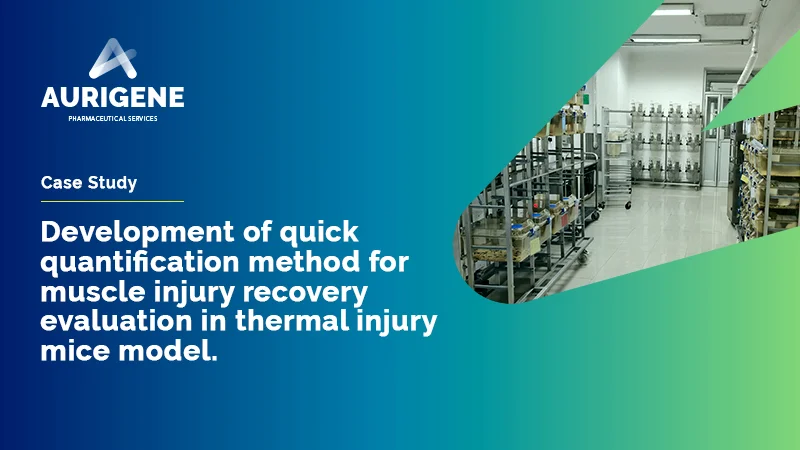
Development of quick quantification method for muscle injury recovery evaluation in thermal injury mice model
Challenges: The evaluation of Evans Blue Dye (EBD) by fluorescence measurements of cryosections of individual muscle sections, and its quantification by auto fluorescence is a laborious and time-consuming process. Study design: Both sham and thermal injury techniques were followed. The evaluation of EBD was done to assess the effectiveness of two compounds in the...
Read More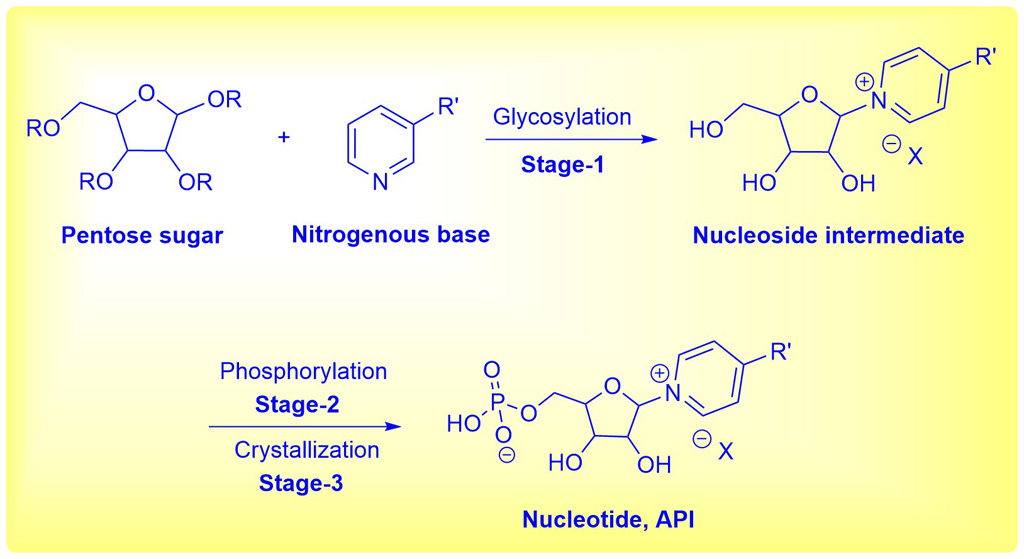
August 28, 2020
An efficient and convenient protocol for the synthesis of tetracyclic isoindolo[1,2-a]quinazoline derivatives
A convenient and one-pot synthesis of tetracyclic isoindolo [1,2-a]quinazoline derivatives via Lewis acid mediated sequential C–N bond formation reactions is reported. This protocol provides a simple and rapid strategy for the synthesis of 12-benzylidene-10,12-dihydroisoindolo[1,2-b]quinazoline derivatives. However, a variety of tetracyclo indole fused quinazol...
Read More-
April 21, 2026
H2SO4-SiO2 catalyzed synthesis, in silico and in vitro evaluation of quinazoline-based fused tetracyclic derivatives as new inhibitors of PDE4B
The 6,6a-dihydro-5H-isoquinolino[2,3-a]quinazoline-5,7,12-trione (DIQT) derivatives (that belong to the quinazoline-based fused tetracyclic class of compounds) though known in the literature, their biological properties have not been explored previously. In the current study, we have explored the phosphodiesterase 4B (PDE4B, an important target for the identifica...
Read More -
January 31, 2025
Development and assessment of a Bcs class II - SGLT2 (Sodium Glucose Cotransporter 2) inhibitor drug in the form of solid lipid Nanoparticles by selecting different lipids, co-surfactants, and manufacturing techniques
Drug Delivery System (DDS) has been used successfully in the past few decades to cure illnesses and enhance health because of its improved systemic circulation and ability to regulate the drug's pharmacological action. As pharmacology and pharmacokinetics advanced, the idea of controlled release emerged, demonstrating the significance of drug release in assessing...
Read More -
January 31, 2025
Development of novel paullone-based PROTACs as anticancer agents
Proteolysis-targeting chimera (PROTACs) represents a promising modality that has gained significant attention for cancer treatment. Using PROTAC technology, we synthesized novel structurally modified paullone-based PROTACs using Cereblon (CRBN) and Von Hippel–Lindau (VHL) E3 ligands....
Read More
Frequently asked questions
What are the syringe fill-finish manufacturing requirements?
Syringe fill finish CDMO development requires strict control of product sterility, particulate levels, and container-closure integrity. Key syringe fill-finish manufacturing requirements include an appropriate cleanroom environment, validated aseptic filling processes, qualified equipment, and trained operators. Material readiness is also critical: syringe type (glass or polymer), siliconization, plunger and stopper compatibility, and needle/shield configuration must match the drug product. As part of fill finish manufacturing services, Aurigene also emphasizes validated sterilization or sterile filtration strategy, in-process controls, and end-to-end traceable batch documentation to meet regulatory expectations.
What are the fill-finish processes to ensure product quality and manufacturability?
Fill finish development services focus on building a robust process that consistently delivers a sterile, stable, and manufacturable drug product. Typical fill-finish processes include formulation readiness checks, sterile filtration (as applicable), aseptic filling, stoppering or plunger placement, sealing/crimping (for vials), visual inspection, and container-closure integrity testing. For syringes, process controls around filling accuracy, air bubble control, and component handling are important. A strong fill finish services CDMO approach also includes process validation, environmental monitoring, and stability-supporting packaging decisions to ensure product quality across shelf life.
What needs to be considered while doing large-scale fill finish manufacturing?
Large-scale fill finish manufacturing services require careful planning to prevent variability and ensure consistent output across long runs. Key considerations include line speed and throughput, equipment capability, aseptic interventions, hold times, and a consistent supply of qualified primary packaging components. Scale-up also needs strong contamination control, robust environmental monitoring, and well-defined in-process testing to minimize batch risk. A reliable fill finish services CDMO also plans for batch-to-batch consistency through validated cleaning, changeover controls, and clear deviation and CAPA management to support regulatory compliance.
What critical factors need to be considered while doing fill finish development?
In fill finish CDMO development, the most critical factors include formulation compatibility with the primary container, protein or molecule stability during processing, sterility assurance strategy, and control of particulates and extractables/leachables. Fill finish development services also focus on defining acceptable process windows for filtration, filling, mixing, and hold times to avoid aggregation, potency loss, or pH drift. Additional critical factors include container-closure integrity, accurate dose delivery, and a scalable process design that can move smoothly from clinical to commercial manufacturing. A strong fill finish development services plan reduces late-stage surprises and improves overall manufacturability.
You are about to leave Aurigene Pharmaceutical Services and affiliates website. Aurigene Pharmaceutical Services assumes no responsibility for the information presented on the external website or any further links from such sites. These links are presented to you only as a convenience, and the inclusion of any link does not imply endorsement by Aurigene Pharmaceutical Services.
If you wish to continue to this external website, click Proceed.

Leaving already?
Don't forget to join us at
CPHI Worldwide 2023.
October 24th-26th, 2023 | Barcelona, Spain
Get ready to accelerate your drug’s journey to the market