

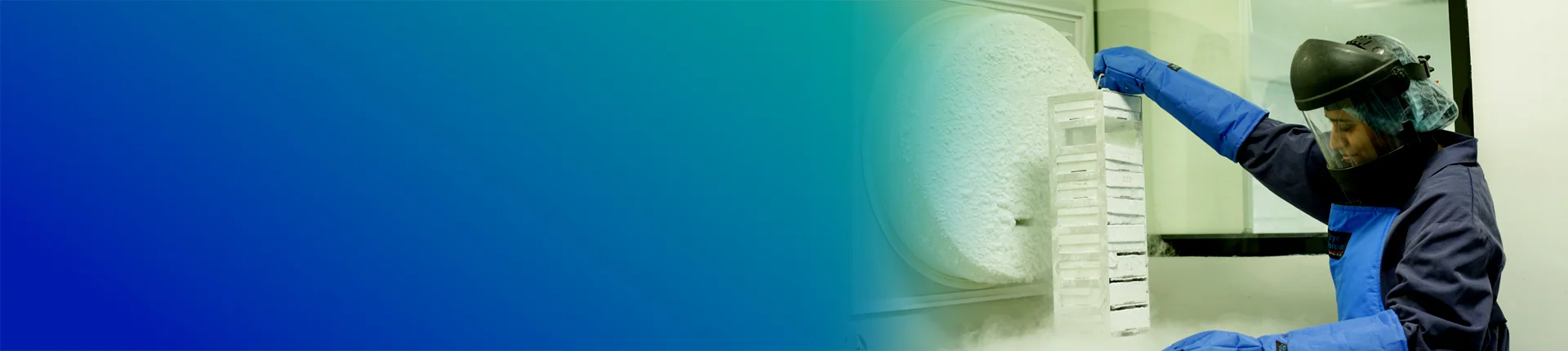
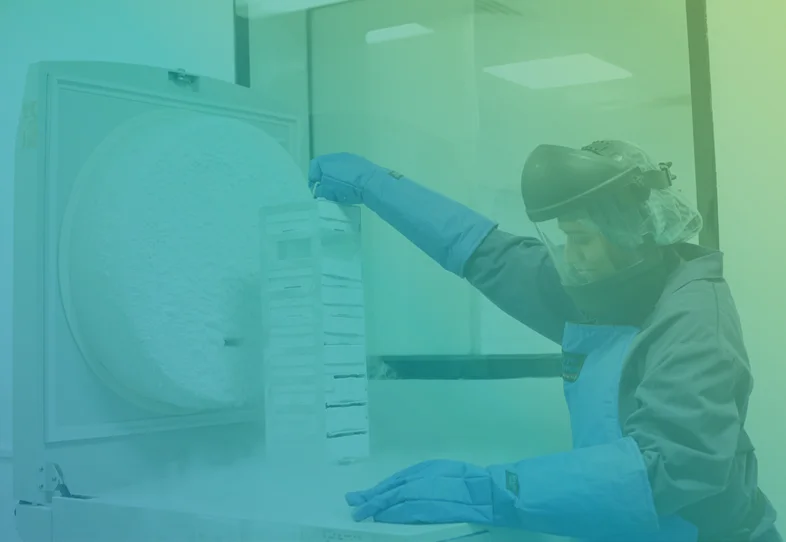
Cell line development is a foundational step in biologics manufacturing. The quality, stability, and productivity of the selected clones directly influence the success of upstream processing, downstream purification, and long-term manufacturing performance.
At Aurigene, our cell line development (CLD) platform is designed to generate high-performing, stable cell lines suitable for scalable manufacturing. Our integrated workflow combines advanced transfection technologies, automated monoclonal selection systems, and rigorous characterization strategies to support rapid progression from gene sequence to manufacturing-ready clones.
Our CLD capabilities support a wide range of biologic modalities including monoclonal antibodies, bispecific antibodies, recombinant proteins, and complex biologics including immunofusions. The platform integrates seamlessly with upstream process development and analytical characterization, enabling smooth transition from discovery through IND-enabling development.
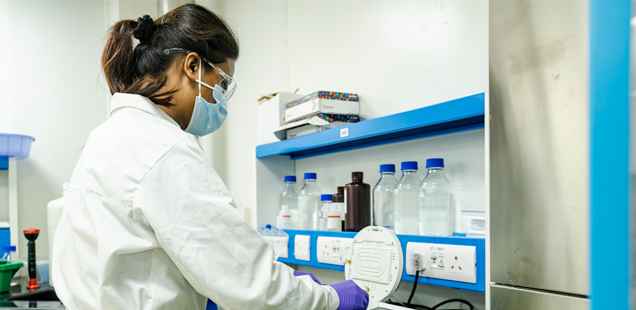
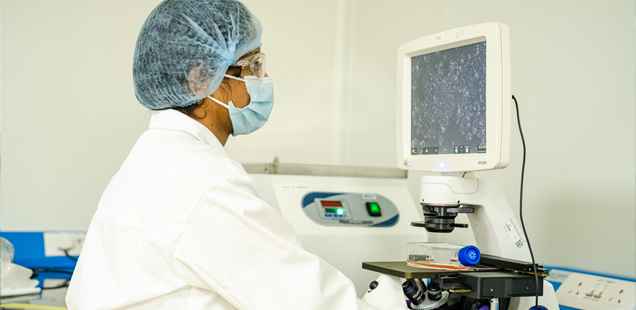
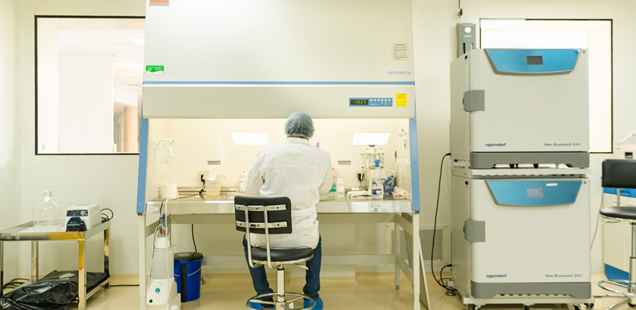
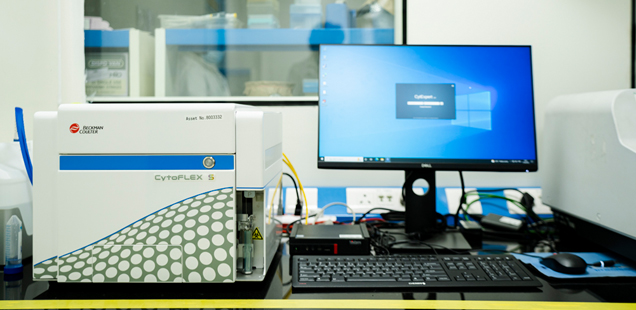
Our CLD process typically progresses through the following stages:
- Transient expression evaluation
- Stable pool generation
- Monoclonal selection and screening
- Clone characterization and stability assessment
- Finalization of top clones suitable for transition into process development and cell banking workflows
This structured approach ensures that only the most robust clones progress into process development and manufacturing.
Host Cell Platforms
Our cell line development programs primarily utilize CHO-based mammalian expression systems that are well established for biologics production. Supported host platforms include:
- Freedom CHO-S
- CHO DG44
- CHO ZN (CHO GS knockout platform combined with UCOE technology)
- Transposase-based integration platforms (CHO GS knockout platform with transposase technology)
These systems enable efficient gene integration, high expression levels, and consistent product quality across development stages.
Transient Expression
Cell line development programs often begin with transient expression analysis to confirm protein expression and evaluate developability assessment early in the workflow. Key activities include:
- Transient expression analysis in CHO cells
- Recombinant protein/antibody characterization – proper pairing of expressed chains if any, aggregates, clipping and mass confirmation
- Accelerated stability analysis studies
Electroporation and Stable Pool Generation
- Electroporation of CHO cells using Neon NXT electroporation systems
- Selection of electroporated cells expressing transgene (GS selection) to generate stable pools
- Characterization of stable pools
Characterization of stable pools involve shake flask fed-batch evaluation under controlled environmental conditions to assess growth performance and productivity. The product produced by stable pools is characterized for its quality parameters including aggregated, clipping, proper chain pairing, mass and functional bio-assay.
Monoclonal Selection and Screening
Top pool is used for single cell monoclone generation. Identification of high-producing monoclonal cell lines is achieved using automated clone isolation and screening technologies. Aurigene utilizes CellCelector Flex systems to isolate and expand monoclonal cell lines from selected stable pools. Advantages of this approach include:
- Automated monoclonal isolation
- Improved cell growth in nanowell environments
- Rapid expansion of candidate clones
- High-throughput screening of productivity
Clone screening workflows evaluate productivity, growth behavior, and expression stability. In many programs, clones demonstrate significant titer improvement during the transition from stable pool to monoclonal stage.
Clone Characterization and Stability Assessment
Once high-performing clones are identified, they undergo detailed characterization to ensure suitability for further development. Characterization studies include:
- Productivity assessment during fed-batch culture
- Stability analysis across multiple generations
- Monitoring of charge variants and glycosylation profiles
- Evaluation of product quality consistency
Stability studies typically evaluate clones across extended culture periods to confirm that productivity and product attributes remain consistent. These studies help ensure that the selected clone can support long-term manufacturing without significant drift in quality attributes.
Lead Clone Selection
Lead clone selection is based on a balanced review of productivity, growth behavior, stability, and product quality attributes. The aim is not to advance the highest-titer clone alone but to identify a clone that performs consistently and is suitable for further process development and manufacturing.
This decision takes into account fed-batch performance, stability across generations, and quality-related indicators such as charge variant and glycan consistency. A more balanced selection strategy helps reduce downstream risk and supports smoother transition into process development and cell banking activities.
Cell Banking
Following clone selection and characterization, the lead clone progresses into dedicated cell banking workflows such as Research Cell Banking and Master Cell Banking. These banks support further development and manufacturing activities.
Dedicated cell banking services ensure controlled storage, traceability, and lifecycle management of production cell lines across development and manufacturing stages.
End-of-production cell bank (EoPCB) evaluation typically occurs later in the manufacturing lifecycle to confirm long-term genetic stability of the production cell line.
Integration with Process Development
Cell line development at Aurigene is closely integrated with process development and product characterization to enable smooth technology transfer into bioreactor systems. Development teams evaluate:
- Fed-batch culture performance
- Media and feeding strategies
- Downstream purification strategies
- Formulation and stability analysis of product
This integration ensures that selected clones are compatible with scalable manufacturing processes.
Supported Biologic Modalities
Our CLD platform supports development of a wide range of biologic formats including:
- Monoclonal antibodies
- Bispecific antibodies
- Multispecific antibodies including complex immunofusions
- Recombinant proteins
- Antibody fragments such as Fab and scFv
Why Partner with Aurigene for Cell Line Development

Robust mammalian expression platforms

Automated monoclonal selection technologies

Integrated development from CLD to manufacturing

Experienced teams supporting complex biologic modalities

Scalable development workflows designed for clinical and commercial manufacturing
Virtual Tour

Hyderabad R and D Center
Bangalore R and D Center
Connect with our scientific experts for your drug discovery, development, and manufacturing needs
We understand that clear communication is essential to successful collaborations, and that's why we have a dedicated team that is always ready to help you. Whether you have questions about our services, want to discuss a potential partnership, or simply want to learn more about our company, we're here to help.
Our team of experts is dedicated to providing personalised solutions tailored to your unique needs. So, please don't hesitate to reach out to us. We look forward to hearing from you and helping you achieve your business goals.
Learning Resources

-
April 21, 2026
H2SO4-SiO2 catalyzed synthesis, in silico and in vitro evaluation of quinazoline-based fused tetracyclic derivatives as new inhibitors of PDE4B
The 6,6a-dihydro-5H-isoquinolino[2,3-a]quinazoline-5,7,12-trione (DIQT) derivatives (that belong to the quinazoline-based fused tetracyclic class of compounds) though known in the literature, their biological properties have not been explored previously. In the current study, we have explored the phosphodiesterase 4B (PDE4B, an important target for the identifica...
Read More -
January 31, 2025
Development and assessment of a Bcs class II - SGLT2 (Sodium Glucose Cotransporter 2) inhibitor drug in the form of solid lipid Nanoparticles by selecting different lipids, co-surfactants, and manufacturing techniques
Drug Delivery System (DDS) has been used successfully in the past few decades to cure illnesses and enhance health because of its improved systemic circulation and ability to regulate the drug's pharmacological action. As pharmacology and pharmacokinetics advanced, the idea of controlled release emerged, demonstrating the significance of drug release in assessing...
Read More -
January 31, 2025
Development of novel paullone-based PROTACs as anticancer agents
Proteolysis-targeting chimera (PROTACs) represents a promising modality that has gained significant attention for cancer treatment. Using PROTAC technology, we synthesized novel structurally modified paullone-based PROTACs using Cereblon (CRBN) and Von Hippel–Lindau (VHL) E3 ligands....
Read More
You are about to leave Aurigene Pharmaceutical Services and affiliates website. Aurigene Pharmaceutical Services assumes no responsibility for the information presented on the external website or any further links from such sites. These links are presented to you only as a convenience, and the inclusion of any link does not imply endorsement by Aurigene Pharmaceutical Services.
If you wish to continue to this external website, click Proceed.


Leaving already?
Don't forget to join us at
CPHI Worldwide 2023.
October 24th-26th, 2023 | Barcelona, Spain
Get ready to accelerate your drug’s journey to the market