
Join the discussion
An Integrated Approach to
De-Risking Bispecific
Antibody Development
How can early CMC integration strengthen
bispecific development?

 Amit Jogi, PhD
& Manufacturing


Reserve your place
We'll email you the joining details.
Presented by Aurigene Pharmaceutical Services, a wholly-owned subsidiary of Dr. Reddy's Laboratories (NYSE: RDY)
Two binding arms ask more of every CMC workstream
With a bispecific, chain pairing, homodimers, heavy-chain clipping and aggregation all come into play, and both arms have to be shown to engage their targets. When cell line, process, analytical and drug product teams work inside one framework, each of these is understood at the stage where it is simplest to resolve.
What you will take away
- Which molecular features make bispecifics demanding in CMC, from chain mispairing and clipping to impurity clearance and stability at high concentration.
- How connecting cell line, upstream, downstream, analytical and drug product development brings risks to light earlier.
- What the case studies achieved on titre, purity, impurity characterisation and formulation speed.
- How carrying process knowledge from stable pool through scale-up and technology transfer supports comparability on the way to GMP clinical supply.


One framework, from stable pool to GMP supply
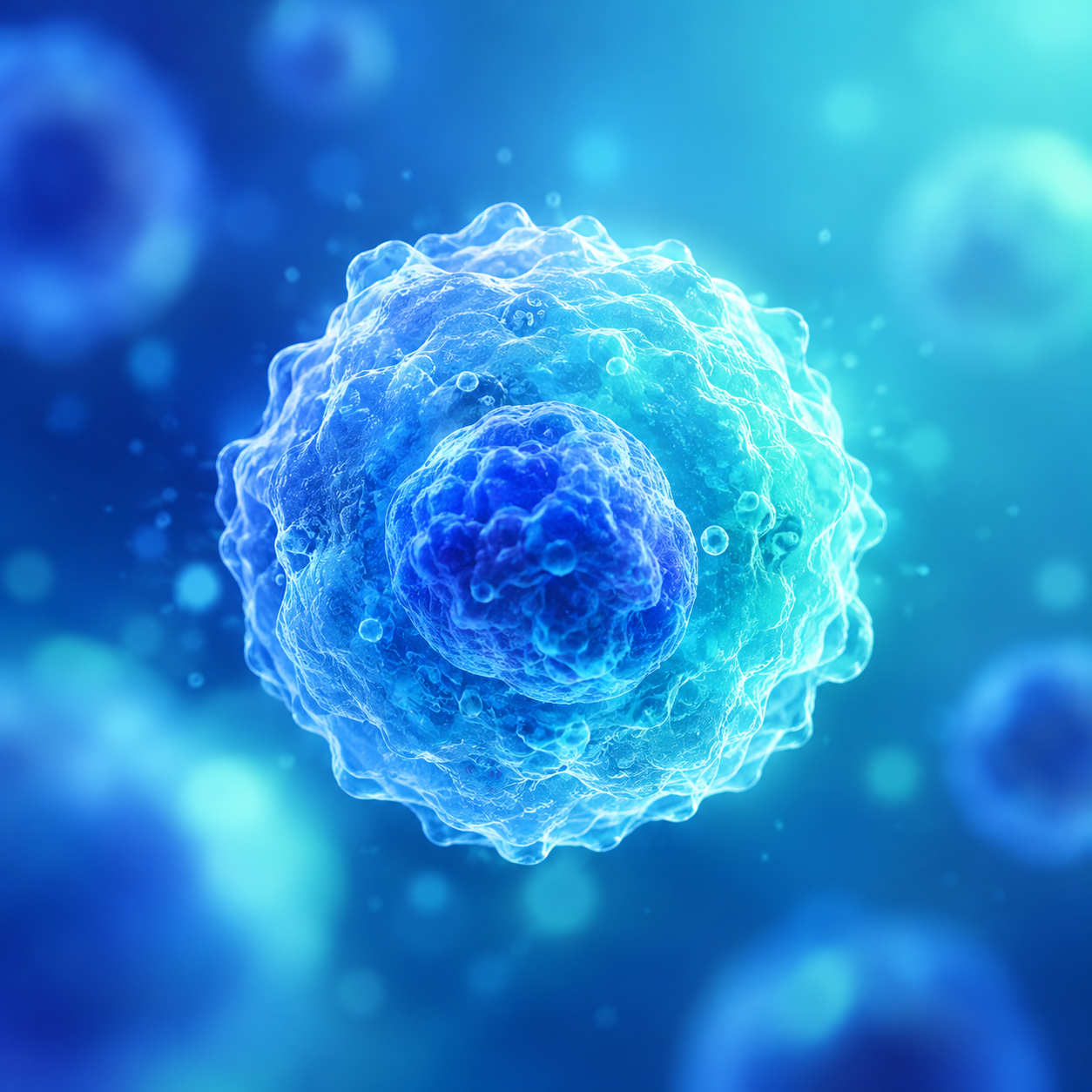
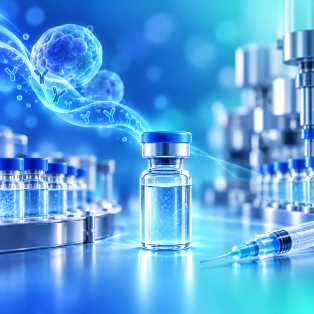

Cell line development
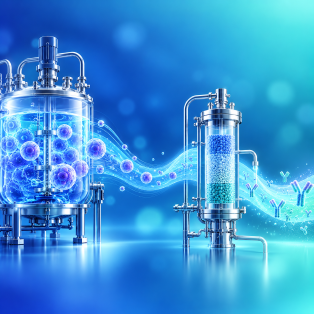
Upstream and downstream process development
- 10+ g/L titre, roughly doubled, with resin cost halved
- >99% drug substance purity
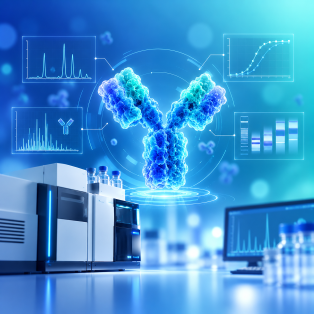
Analytical characterisation
- Located a clipping site and fed the finding back to process development to improve purity.
Drug product development
- ~40% faster to a stable drug product than the industry average, with formulation run in parallel
GMP clinical supply
Process knowledge gathered from stable pool onward travels with the molecule through scale-up and technology transfer.


Who
should attend

Process development scientists in upstream, downstream and cell line development
CMC leads, programme and project managers at biotech and pharma companies
Analytical and bioanalytical development scientists
Formulation and drug product development scientists
Heads of biologics, technical operations, external manufacturing and outsourcing evaluating CDMO partners


Your speaker
Amit Jogi, PhD
Global Head, Biologics Development & Manufacturing,
Aurigene Pharmaceutical Services
Amit leads Aurigene's integrated biologics platform, from cell line development through process and drug product development to GMP manufacturing. He brings more than 20 years in bioprocess development, technology transfer and contract development and manufacturing of proteins and monoclonal antibodies, and today takes complex modalities such as bispecific antibodies from early development into clinical and commercial supply. He holds a PhD in Microbiology from Bhavnagar University.
Explore Aurigene's bispecific and biologics work

Explore The CMC Decisions That Shape Bispecific Development.

Questions we get asked at the stand
Aurigene supports multiple recombinant biologic formats including monoclonal antibodies, Fab fragments, bispecific antibodies, multispecific antibodies, ScFv, proteins, biosimilars, peptides, and other complex biologics.
Yes. Aurigene supports capabilities spanning cell line development, research and master cell banking, upstream and downstream process development, formulation, analytics, bioanalytics, tech transfer, and manufacturing support.
Yes. The biologics setup includes support that connects drug substance and drug product activities, including formulation and fill-finish-linked development logic.
Yes. Research cell bank and master cell bank services can both sit within a wider biologics development pathway.
The value lies in the linkage between cell line development, process development, formulation, analytical and bioanalytical work, tech transfer, manufacturing support, and digital quality systems.